


Discover the
Remarkable Science
of Glyconutrients.
From aloe vera to brown seaweed, nature offers a fascinating world of complex carbohydrates. Let’s explore what they are, why researchers study them, and where VeraCell fits in.
A closer look at the ingredients. A clearer understanding of the evidence.
Your cells have
a language of their own.
Cells recognize and respond to one another through many kinds of signals. Some involve glycans—sugar chains found on proteins and fats at cell surfaces. Think of them as part of a cell’s molecular identity: their shapes help other molecules recognize and interact with the cell.[1]
This field is called glycobiology. It studies how these structures are made and what they do. “Glyconutrients” is a term often used in supplement marketing for certain sugars and complex carbohydrates.
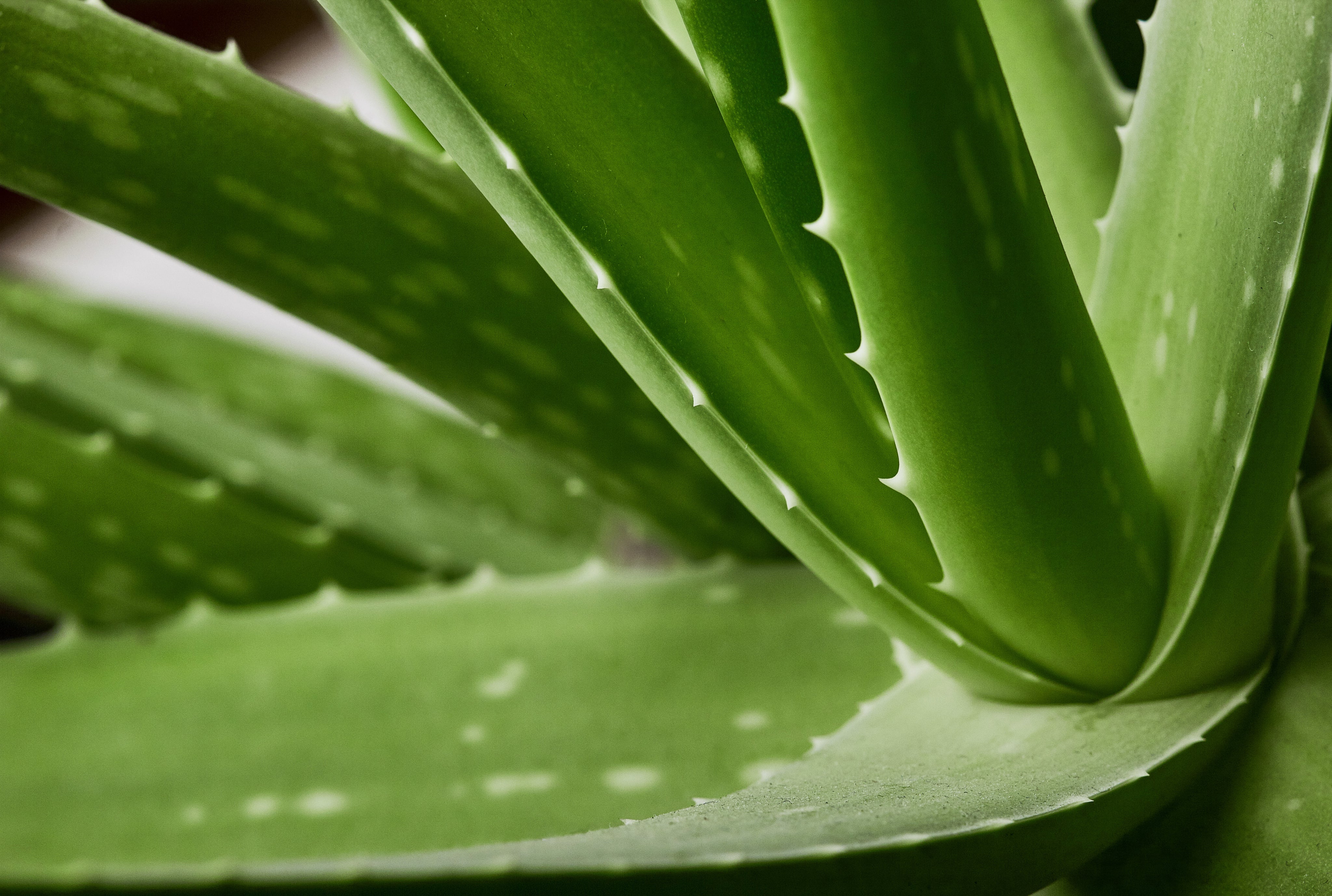
From aloe leaves
to ocean plants.
Acemannan and fucoidan are both polysaccharides, but their structures, sources, and research histories differ.
Acemannan
A complex carbohydrate found in aloe vera’s inner-leaf gel. Its chain contains mainly mannose units, with acetyl groups that help define its structure.
Researchers investigate its interactions with cells, immune processes, and tissue repair. Studies use different preparations and routes of application.
Some human research applies acemannan locally in dental care. That is different from swallowing a daily powder, and cannot establish VeraCell’s benefits.[2]
Fucoidan
A family of sulfated polysaccharides found in brown seaweeds. Source species, molecular size, and processing can change the material being studied.
Laboratory studies and small human trials explore immune-related responses and other biological effects. Human findings vary by study and preparation.
A result for one fucoidan extract, dose, or population does not automatically apply to another extract—or to the VeraCell blend.[3, 4]
Five compounds.
One daily powder.
The manufacturer describes VeraCell as an unflavored prebiotic supplement. Its current FAQ lists these amounts per approximately 2-gram scoop.[5]
Although sometimes described as a “five-polysaccharide” formula, N-acetyl-D-glucosamine is an amino-sugar derivative, not a polysaccharide. The more precise description is a five-compound blend.
Use the label on your own product to confirm the current formulation, serving size, and directions.
| Compound | Amount |
|---|---|
| Larch arabinogalactanTree-derived polysaccharide | 750 mg |
| Gum acacia fiberTree-derived soluble fiber | 750 mg |
| AcemannanAloe-derived polysaccharide | 200 mg |
| N-acetyl-D-glucosamineAmino-sugar derivative · also called NAG | 150 mg |
| FucoidanSeaweed-derived polysaccharide | 100 mg |
Source: MarketPlace Global’s VeraCell FAQ ↗
Manufacturer information, reviewed October 17, 2026.
Ingredient research.
Finished-product evidence.
They answer different questions. Keeping them separate helps you see what a study actually supports.
What can a molecule do?
Cell and animal experiments can explore mechanisms. They do not establish the same outcome in a person taking a supplement.
What happened in people?
A trial tests a particular ingredient preparation, amount, route, and group of people. Those details determine how relevant the result is.
Was this exact blend tested?
The studies linked below do not test the finished VeraCell formula. They cannot establish that VeraCell improves cellular communication or produces the same outcomes.
Explore the published studies.
Start with the kind of research, then look at what was tested—and what was not. Each link opens the publication record or full paper.
Biological roles of glycans
Varki · Glycobiology · 2017
An overview of the diverse functions of sugar chains, including recognition and interactions between cells.
Context: explains glycobiology. It is not a clinical trial of a glyconutrient supplement.
Read the publication ↗Acemannan & tooth-socket healing
“Acemannan-induced tooth socket healing” · 2021
A randomized study followed dental healing after acemannan sponges were placed in extraction sockets.
Context: local dental application. This does not test an oral VeraCell powder or general wellness outcomes.
Read the study ↗Fucoidan & immune-cell activity
Tomori et al. · Marine Drugs · 2021
Forty adults received placebo or a specific fucoidan beverage at 3 grams per day for 12 weeks. Researchers reported changes in NK-cell activity, including a placebo comparison in men at week eight.
Context: small pilot with subgroup findings and supplier involvement. It does not demonstrate fewer infections or test VeraCell.
Read the study ↗Fucoidan during exercise training
Cox et al. · Published online 2024
Twelve active men took a specific fucoidan extract at 1 gram per day during a three-week training period. Most measured biomarkers were stable, with modest differences between supplement conditions.
Context: a small, short trial in active men, using another extract and dose. It is not evidence of a benefit from VeraCell.
Read the study ↗For more background: Liu et al., 2019: review of acemannan’s structure and research applications. Research on an ingredient should not be described as clinical proof for the finished blend.
A few questions worth asking.
Is VeraCell a probiotic?
The manufacturer describes it as a prebiotic powder, not a product that supplies live probiotic organisms. Check the current label for the full formulation.
Does “cellular communication” mean proven results?
No. Glycans have important biological roles, but that fact alone does not establish that taking this supplement improves cell signaling or changes a health outcome.
Are all fucoidan or aloe studies interchangeable?
No. Ingredients can differ in source, extraction, purity, molecular size, and dose. A topical or dental study also uses a different route from swallowing a supplement.
How do I decide whether it fits my routine?
Review the current label and ask your healthcare professional about suitability, especially if you take medication, are pregnant or breastfeeding, or are considering a product for a child. Follow the label’s directions.
Understand the ingredients.
Explore your next step.
I’m here to help you find the product information and research resources you want to review.
Talk with Rebecca.
Questions about VeraCell, the formulation, or where to find current product details?
Ask About VeraCell ↗Or book a free conversationAloe photograph: Saje botanical imagery. Educational information; not medical advice. Supplements are not intended to diagnose, treat, cure, or prevent disease.